October 08, 2026



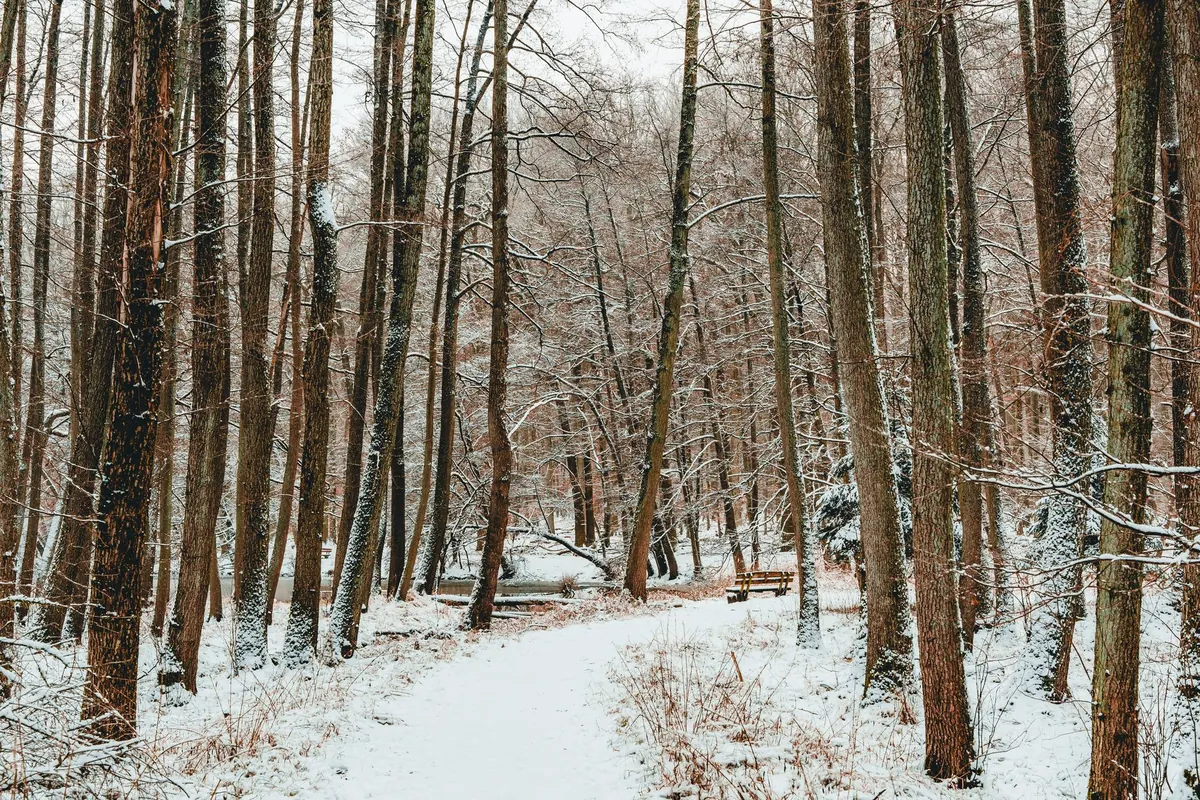
Larch season is the woodland equivalent of a second autumn. Just as the oaks and beeches are losing their leaves, larches turn from green to gold, then copper, before dropping their needles entirely. These deciduous conifers are scattered through plantations and mixed woods across the UK, and from mid-October to late November they light up the canopy. The walks below are chosen for the quality of their larch colour, the variety of terrain, and the fact that you can reach them without a major expedition.
Larches are easy to spot once you know them. They have soft, feathery needles in tufts, unlike the flat sprays of yew or the sharp needles of spruce. In early autumn they are still green, often paler than surrounding pines. By late October, Japanese larch usually turns first, followed by European larch. The colour ranges from butter yellow to deep orange. After a windy week, the needles fall and create a golden carpet. Best conditions: a clear, cool day after rain, when the low sun catches the trees. Check local forestry websites before setting out, as some tracks close for timber operations.
Grizedale sits between Coniston Water and Windermere, and its mix of larch, pine and broadleaves makes it a reliable autumn destination. The forest is criss-crossed with waymarked trails, from the easy Ridding Wood Trail (about 1.5km) to the longer Silurian Way (around 16km). For larch colour, head for the higher sections around Grizedale Tarn and the Carron Crag area. Terrain: forest tracks and some rocky, rooty paths. Expect mud after rain. Access: main car park at Grizedale, with toilets and a café; charges apply. Buses run from Hawkshead in season. Dogs are welcome but keep them under control near livestock. Mountain bikers use many trails, so keep left and listen.
Coed y Brenin, near Dolgellau, is better known for mountain biking, but its walking trails are excellent in larch season. The forest has large stands of larch alongside Douglas fir and native oak. Waymarked walks range from a gentle 2km riverside loop to half-day routes of 10km or more. The Mynydd Du trail gives wide views over the Mawddach estuary, while the Yr Afon trail stays low beside the river. Terrain: well-surfaced forest roads and rougher singletrack; some steep climbs. Access: visitor centre with parking, café and toilets. Some trails are shared with bikes. Check Natural Resources Wales for any diversions before you travel.
Kielder is one of the largest man-made forests in the UK, and its larch plantations turn gold against dark spruce. The Lakeside Way is a 26-mile multi-use trail around Kielder Water; you can walk short sections, such as the stretch near Kielder Castle or the Bull Crag Peninsula. For a quieter walk, try the Forest Drive trails or the Hindhope Linn loop. Terrain: wide, compacted tracks, with some steady climbs. Access: Kielder Castle car park, plus several smaller car parks around the reservoir. Facilities are limited outside the main visitor hubs. Bring a map and waterproofs; weather changes quickly here.
The Forest of Dean is a patchwork of oak, beech and larch, with miles of easy tracks. The Sculpture Trail at Beechenhurst is a good family option, around 4 miles (6.5km), and larch trees line several sections. For a longer walk, link the Family Cycle Trail with footpaths around Mallards Pike and Speech House. Terrain: gentle undulations, wide gravel paths, some muddy patches. Access: Beechenhurst, Mallards Pike and Cannop Cycle Centre have parking, toilets and cafés; charges vary. Buses from Gloucester and Coleford serve some areas. Wild boar and deer are present; keep dogs close and do not approach.
Macclesfield Forest, above the Cheshire plain, has larch, pine and rows of mature beech. The larch colour here is especially good around Trentabank Reservoir and the path up to Tegg’s Nose. A circular route of about 5km takes in the reservoir, forest tracks and a viewpoint. Terrain: steep in places, with stone steps and muddy sections. Access: Trentabank car park (pay and display), buses from Macclesfield. The walk to Tegg’s Nose adds a climb but rewards with views to the Welsh hills on clear days.
Dalby Forest, on the southern edge of the North York Moors, is a strong choice for larch. The waymarked trails range from a short, level loop around Staindale Lake to longer routes of 8km or more to the Bridestones. The Bridestones walk climbs through larch and pine to sandstone outcrops. Terrain: forest tracks, soft paths and some steep gradients. Access: Dalby Forest Drive charges for vehicles; car parks at Staindale, Low Dalby and Dalby Visitor Centre. Toilets and café at the visitor centre. Check opening times for the drive, which vary by season.
Larch season is short. Start with a local forestry website or estate office to check for trail closures, timber operations and parking charges. Then:
If you are walking alone, tell someone your route and expected return time. In remote areas such as Kielder or the Scottish Highlands, consider a personal locator beacon. For health concerns, speak to a qualified professional. But for most larch walks, the main risks are mud, weather and short days. Go early, go slow, and let the gold do the rest.
Photo: Johannes Plenio / Pexels

Exploring woodland trails, walks, and outdoor adventures..
Copyright © 2026 Larch Loop. All rights reserved. Larch Loop.