October 08, 2026


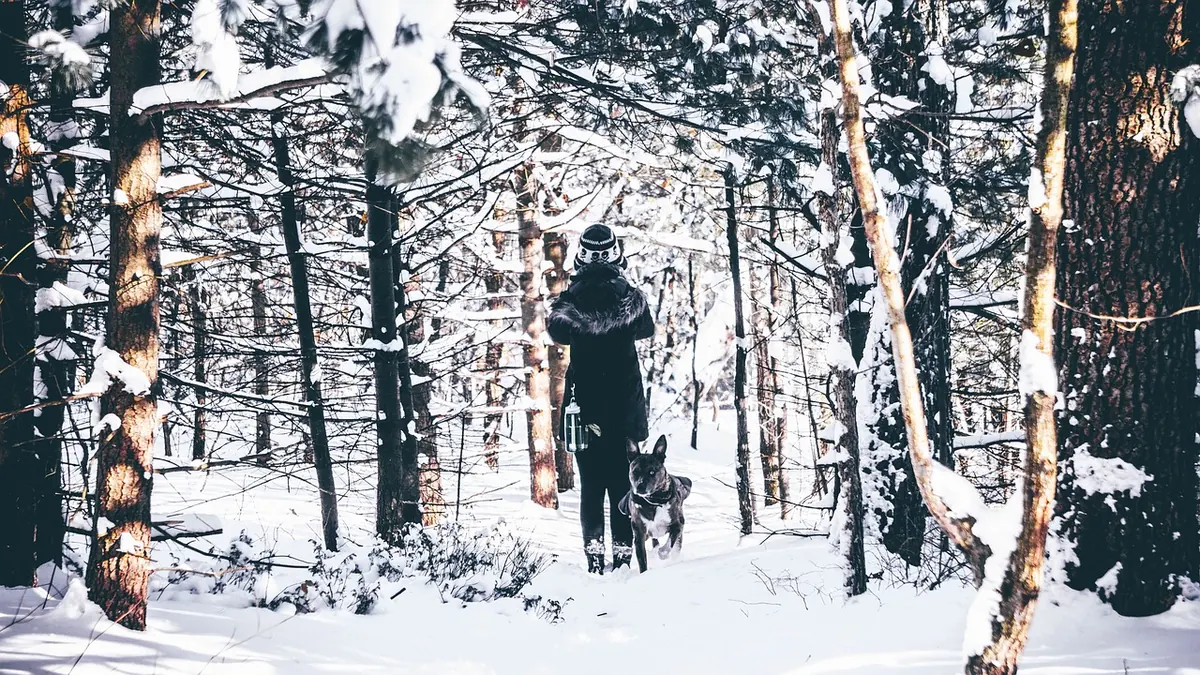
Woodland is the best company a dog can have. There is scent on every trunk, leaf litter to plough through, the occasional squirrel to ruin everyone's composure, and shade when the sun turns a summer walk into a slog. It also throws up its own set of problems: sheep on the other side of a kissing gate, a stile your dog will not climb, ticks in the long grass off the path, and a green pond that looks like a lovely drink. None of it is complicated. It just needs thinking about before you set off rather than halfway round.
This is the checklist for the woods specifically — the bits that differ from a walk round the park.
For a twenty-minute loop you can get away with a lead and a couple of bags. For a proper woodland hike, take slightly more than feels necessary. It is the walk where you get three miles from the car park that you will be glad of the extras.
Woodland is the hardest place to test a recall you are only half sure of. On open ground you can see your dog; among trees you cannot, and the scent of deer or fox will beat your voice every time. If recall is a work in progress, use a long line and treat the walk as training. There is nothing to be gained by proving the point in the one place where your dog can vanish.
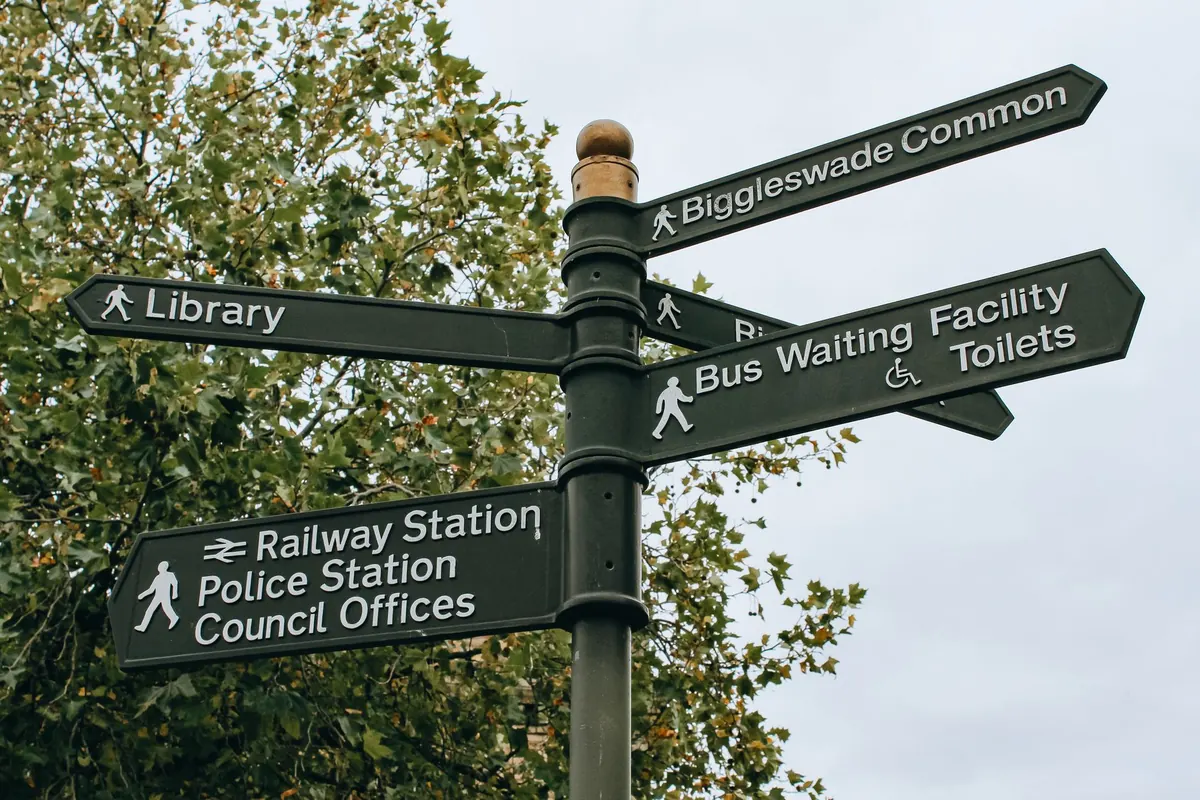
Check the signs at the entrance before you let anything off. Many woods — nature reserves, Wildlife Trust sites, woods with grazing or nesting seasons — ask for leads all year or at particular times, and those local rules are the ones that matter. Where you can let your dog off, keep them within sight and put the lead back on well before you reach a road, a car park or a horse.
Sheep, cattle and ponies are common in and around UK woodland, and dogs and livestock are a bad mix when things go wrong. Keep your dog on a short lead around farm animals, and on open access land this is required at all times near livestock, and between 1 March and 31 July. If cattle come over to investigate and you feel threatened, letting your dog off the lead so you can both walk away calmly is usually safer than being caught between them — but the best answer is to give fields with young stock a wide berth and take the other path.
Deer are the other one to watch. A dog that chases deer can be gone for a long time, and a cornered deer can injure a dog badly. Adders sun themselves on warm path edges and in clearings in spring; give any snake you see plenty of room and do not let your dog nose into the bracken.
From March to July, woodland edges and clearings hold nests, eggs and chicks that are almost invisible until something steps on them. Keep the dog on the path, on a lead where the site asks for it, and do not let them work the undergrowth in that season.
Stiles are where a good walk goes wrong. Ladder stiles with narrow gaps are hard for broad-chested dogs and almost impossible for a large dog to climb. A few habits make them easier:
Underfoot, woodland hides things: roots, rocks, rabbit holes and slick mud on a slope. Check paws at the halfway point for cuts, thorns and grit, particularly on flinty tracks in the south. If a wound looks deep, dirty or keeps bleeding, that is a vet call rather than a first-aid improvisation.
Ticks are the main health nuisance on woodland walks, and they are most active in spring and early summer, with a second push in autumn. They like warm, thin-skinned places: ears, the collar line, armpits, groin, between the toes and around the eyes. Run your hands over the whole dog after every walk and pay attention to anywhere they scratch.
Remove a tick with a proper tick tool or fine-tipped tweezers, gripping as close to the skin as you can and pulling steadily upwards without squeezing the body or twisting it free. Do not burn it, smother it in oil or leave the head in. If your dog becomes lethargic or unwell in the days or weeks afterwards, ring your vet and mention the tick. Take their advice rather than a forum's.
Carry drinking water and offer it regularly, especially on humid summer days when woodland traps the heat and there is less breeze than on open hills. Do not rely on streams and puddles; they can carry agricultural run-off and whatever is upstream. In warm weather, keep dogs out of still water with a scum, a paint-like film or an odd blue-green colour, as blue-green algae is dangerous and the sensible course is total avoidance. When in doubt, keep them on the lead past the water and give them a bowl instead.
Pick it up, bag it and carry it to a bin — or home if there is not one. Bags hung on branches or flung into the undergrowth are litter, and they last a long time. Beyond that, small courtesies add up: keep dogs out of bluebell patches and newly planted areas, where paws do real damage, and do not let them chase the wildlife you came to see. If your route crosses private land, keep to the path and follow any local signs.
Before you leave the car: check the entrance sign for lead rules, fill the water bottle, pocket the bags and the tick tool. On the walk, lead on for roads, livestock, nesting season and anything you cannot see round. At the gate back to the car park, lead on, then a full hands-on tick check, a drink, and a towel down before the boot. Do that every time and woodland walking with a dog stays what it should be — the best few hours of the week for both of you.
Photo: StockSnap / Pixabay

Exploring woodland trails, walks, and outdoor adventures..
Copyright © 2026 Larch Loop. All rights reserved. Larch Loop.