October 08, 2026




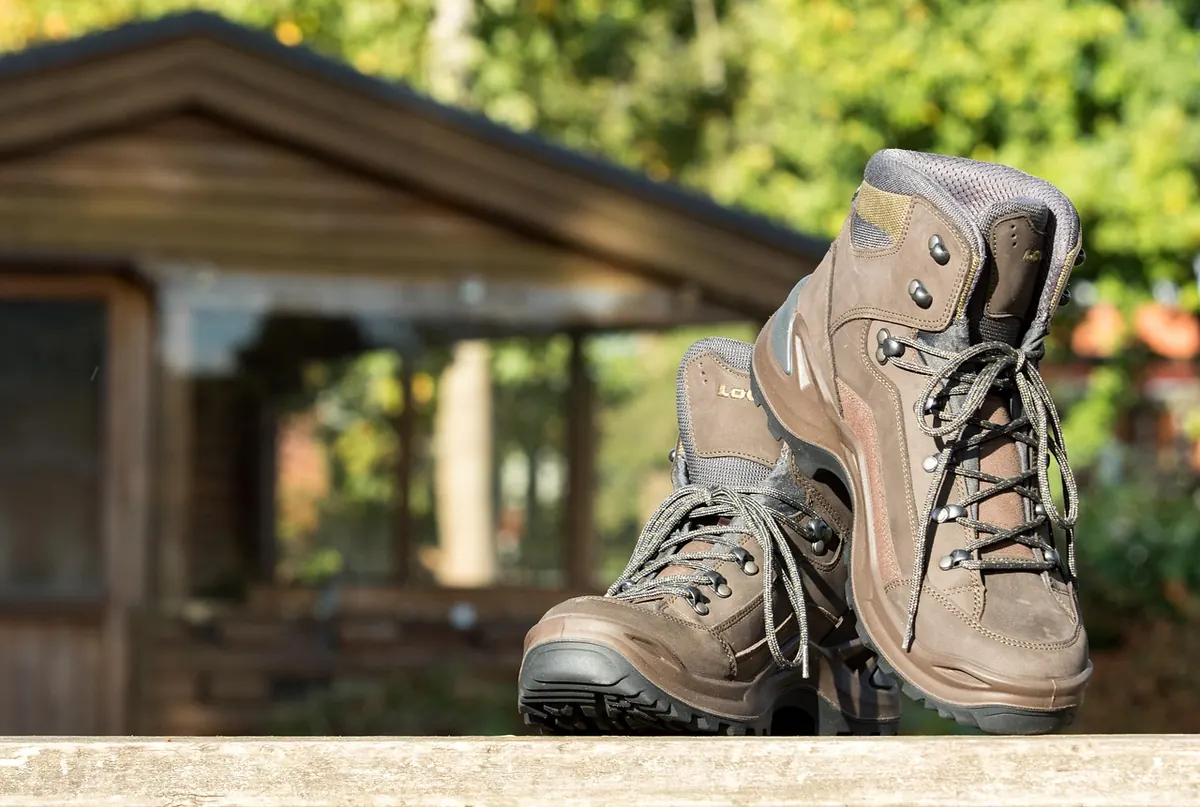
A February path through a beech wood in the Chilterns and a dry August track at Coed y Brenin are both "woodland", and they ask different things of your feet. Add a clay bridleway in the Midlands and a root-tangled path in Eryri and the question gets muddier still. There is no single winner in the trail shoes versus walking boots debate — but there is a right answer for the walk you are actually doing. Here is how to work it out.
Woodland is rarely the problem. What sits under it is. Leaf litter hides roots, so the ground looks flat and behaves like a tripwire. Mud forms on top of clay and stays slick for days after rain. Boardwalks grow a film of algae that behaves like ice. A stream crossing that is ankle-deep in June can be over the top of your boot by November.
Walk a few miles of that and your feet move in three directions: forwards, sideways as you step over roots, and down-and-away when a hidden rut catches you. Good woodland footwear is therefore about lateral steadiness, grip on wet wood and rock, and clearing mud — not only about how high the collar sits.
Most trail shoes and walking boots use lugs of roughly 4–6mm; dedicated fell shoes go deeper. Spacing matters as much as depth. Wide, chunky lugs shed mud as you walk, while a shallow, tightly packed pattern clogs within a few steps and turns into a slick on clay or chalk.
Softer rubber grips wet roots and wet rock far better than a hard, long-wearing compound. That is a trade-off: soft rubber wears down quickly on gritstone and tarmac, which is why a pair used on canal towpaths every week can be bald within a season. Check your tread honestly. A worn-out boot offers less grip than a nearly new trail shoe, whatever the label claims.
A high collar does not stop you rolling an ankle. It limits how far the ankle rolls and how much it hurts when it does. Most of the stability you feel comes from a snug heel and midfoot, a sole stiff enough to stop your foot twisting over roots, and how much weight is stacked above your feet.
As a working rule: if you are carrying a loaded pack, or spending hours on steep, loose ground, a boot's extra structure is worth having. If you are on a waymarked three-mile woodland loop with a flask and a sandwich, that structure mostly adds grams. Mid-height boots sit between the two and suit a lot of UK woodland walking very well.
A typical trail shoe weighs somewhere in the region of 300–400g per shoe; a full leather boot can be double that. The gap is most obvious on climbs and in the last hour of a long day, when tired legs start catching roots.
Walkers often say weight on your feet costs more energy than weight in your pack. You do not need the arithmetic to feel it. If your walks end with tired hips and aching knees rather than sore feet, trying something lighter is a sensible experiment.
Waterproof boots and shoes rely on a membrane or on treated leather. Both keep puddles out. Neither breathes especially well, and once water comes over the top — a deep bog, a flooded ford — a waterproof boot becomes a bucket that may take a day or more to dry and feels cold in the meantime.
A mesh trail shoe does the opposite: water gets in quickly, drains quickly and dries within an hour or two of walking. On wet summer woodland walks with stream crossings, plenty of people are happier in non-waterproof shoes with wool socks, which stay warm when damp.
Where boots win clearly is winter mud, peat bogs and long days in cold rain. Waterproof socks are a decent middle route if you want a light shoe without permanently wet feet.
Buy for the walk you do most weeks, not for the trip you do once a year.
Fit beats category every time. Try footwear on late in the day when your feet are at their largest, wear the socks you actually walk in, and check you can slide a thumb behind your heel with the laces done up. On descents, your toes should not jam the front; on ascents, your heel should not lift. If your normal size feels tight across the toes, go up half a size rather than hoping it loosens.
A few habits keep whichever pair you choose working properly:
If you have a foot or ankle condition, or you are returning from injury, speak to a physiotherapist or a podiatrist before choosing between a stiffer boot and a lighter shoe. For everyone else, the pattern is simple: boots for load, mud and cold; trail shoes for speed, roots and warmth. Most UK woodland walkers end up with both, and pick the pair that suits the forecast on the way out of the door.
Photo: picselweb / Pixabay

Exploring woodland trails, walks, and outdoor adventures..
Copyright © 2026 Larch Loop. All rights reserved. Larch Loop.